
WaveSpeed AI is a platform for generating images, videos, and audio using models from multiple providers. You can work through its browser tools or connect the API to your own application. Rather than committing to a single generator, you choose a model and configuration for the asset you want to create.
This guide explains what WaveSpeed offers, how its pricing works, and how to get started. It also covers AIsa as another route to image and video generation when you are ready to explore your options.
What is WaveSpeed AI used for?
The official documentation describes text-to-image, image-to-video, text-to-video, and audio generation. WaveSpeed serves both creators making individual assets and developers building repeatable production workflows.
A small business might generate product backgrounds and short promotional clips. A creative team might explore several visual directions before approving a campaign. A developer might expose a generation feature inside an existing application.
The platform provides access to models; the selected model still determines the supported inputs and output characteristics. A strong image result does not establish how well a related video model will preserve a product's appearance or follow camera instructions.
Which models and tools does WaveSpeed AI offer?
The WaveSpeed model catalog includes image families such as GPT Image and Seedream, and video families such as Seedance, Kling, and Veo. The catalog changes, so check the exact version and task rather than relying on an old model count.
| Your task | Relevant WaveSpeed option | What to check before generating |
|---|---|---|
| Create a still image | Text-to-image models | Dimensions, prompt controls, output count |
| Change an existing image | Image editing models | Reference inputs and edit instructions |
| Animate a product image | Image-to-video models | Image requirements, motion, duration |
| Generate a scene from a brief | Text-to-video models | Resolution, duration, audio options |
| Add sound or voice | Audio models | Supported task, language, output format |
Its web interface guide distinguishes the full model workspace from curated image and video generators. Curated tools are useful when you want somewhere to start; individual model pages provide the settings needed for a more deliberate evaluation.
WaveSpeed also offers a desktop application and integrations including Python, JavaScript, ComfyUI, and n8n. Choose the interface around your working style: manual experimentation, visual workflow building, or application code.
How does WaveSpeed AI pricing work?
WaveSpeed uses prepaid, usage-based billing. Its pricing guide says standard usage does not require a subscription, and each model has its own price. Model choice, resolution, duration, and output count can affect the charge.
The generation button shows an estimate, while the final charge can differ. There is no universal price per image or video across the entire platform. Record the exact settings when comparing costs.
Budget for revisions as well as finished assets. As a hypothetical example, 100 attempts at $0.05 each cost $5. If 20 outputs are accepted, generation spending is $0.25 per accepted asset. These numbers illustrate the calculation; they are not quoted WaveSpeed rates.
Run a small representative batch before scaling up. Measure actual charges and accepted results, then include editing and review time in the project budget.
How to get started with WaveSpeed AI
Begin with one concrete output, such as a square product image. Choose a suitable model, define the subject and composition, and inspect its supported settings. Keep the first brief narrow enough that you can judge whether the result meets it.
For a video project, it can help to approve the still image first and then use a model that supports the required image input. Check whether the result preserves key product details, follows the intended motion, and remains usable throughout the clip.
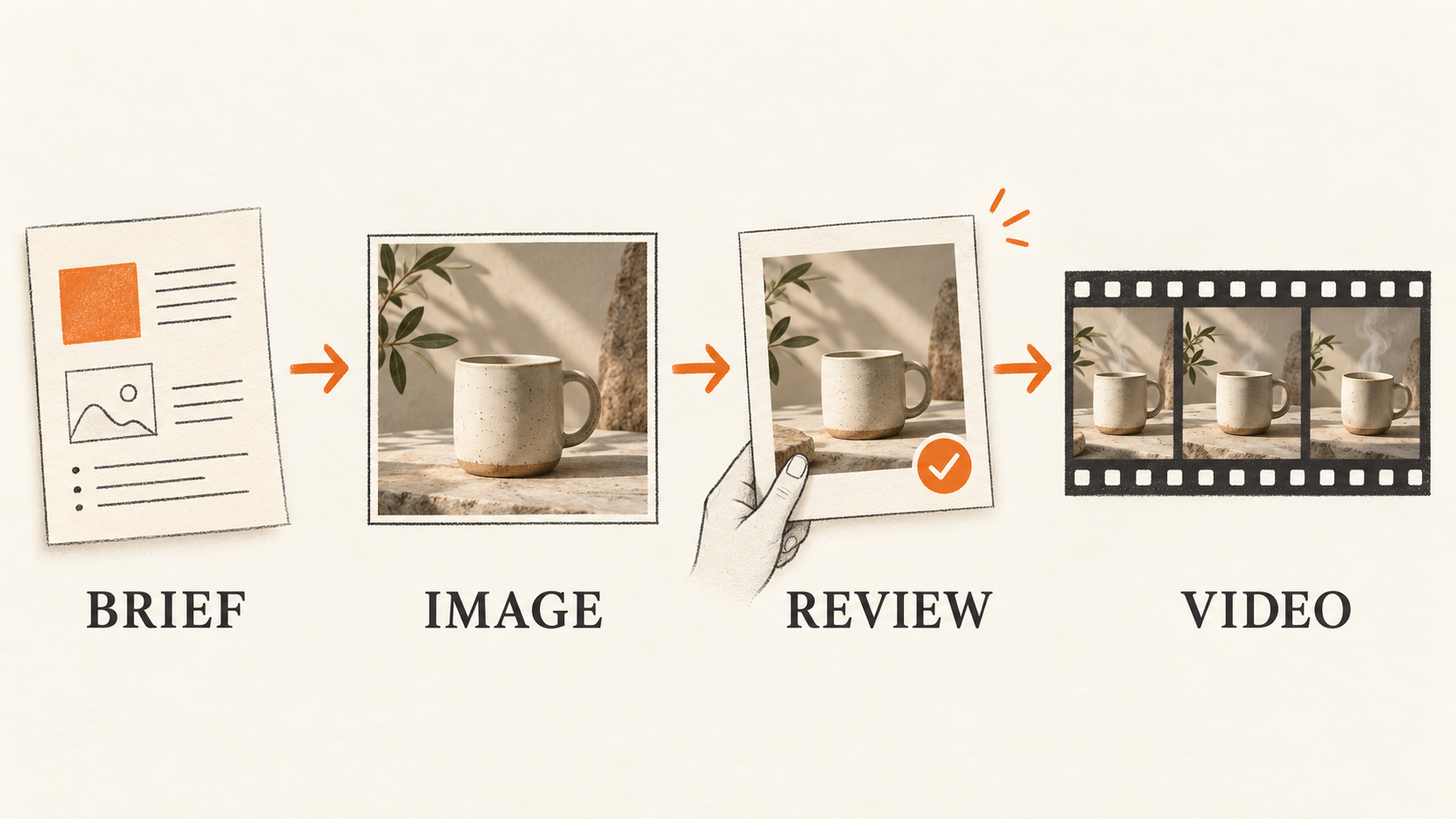
Example workflow: approve the still image before creating a clip with a video model that supports the required inputs. Conceptual illustration.
For application integration, the WaveSpeed API quickstart explains submitting a task and retrieving its result. Store the job identifier, distinguish pending work from failure, and use a bounded waiting period. A timeout does not necessarily mean the original generation stopped, so avoid blindly resubmitting it.
Keep the prompt, model version, settings, charge, and review outcome with each asset. That record makes successful outputs easier to reproduce and unexpected costs easier to investigate.
Watch a WaveSpeed AI workflow walkthrough
Bob Doyle Media demonstrates WaveSpeed's desktop application and workflow builder. The video gives a visual introduction to the creative process. Its references to a free application should not be confused with unlimited free API generation.
Video by Bob Doyle Media. Click the preview to open the embedded player.
Another option for image and video generation: AIsa
If your main goal is to generate images or clips through an API, you can also use AIsa. Its live catalog includes GPT Image 2, Image 2.5 Flare and Sunburst, Seedream 4.5 and 5.0, and Seedance 2.5, alongside Seedance 2.0 and Fast.
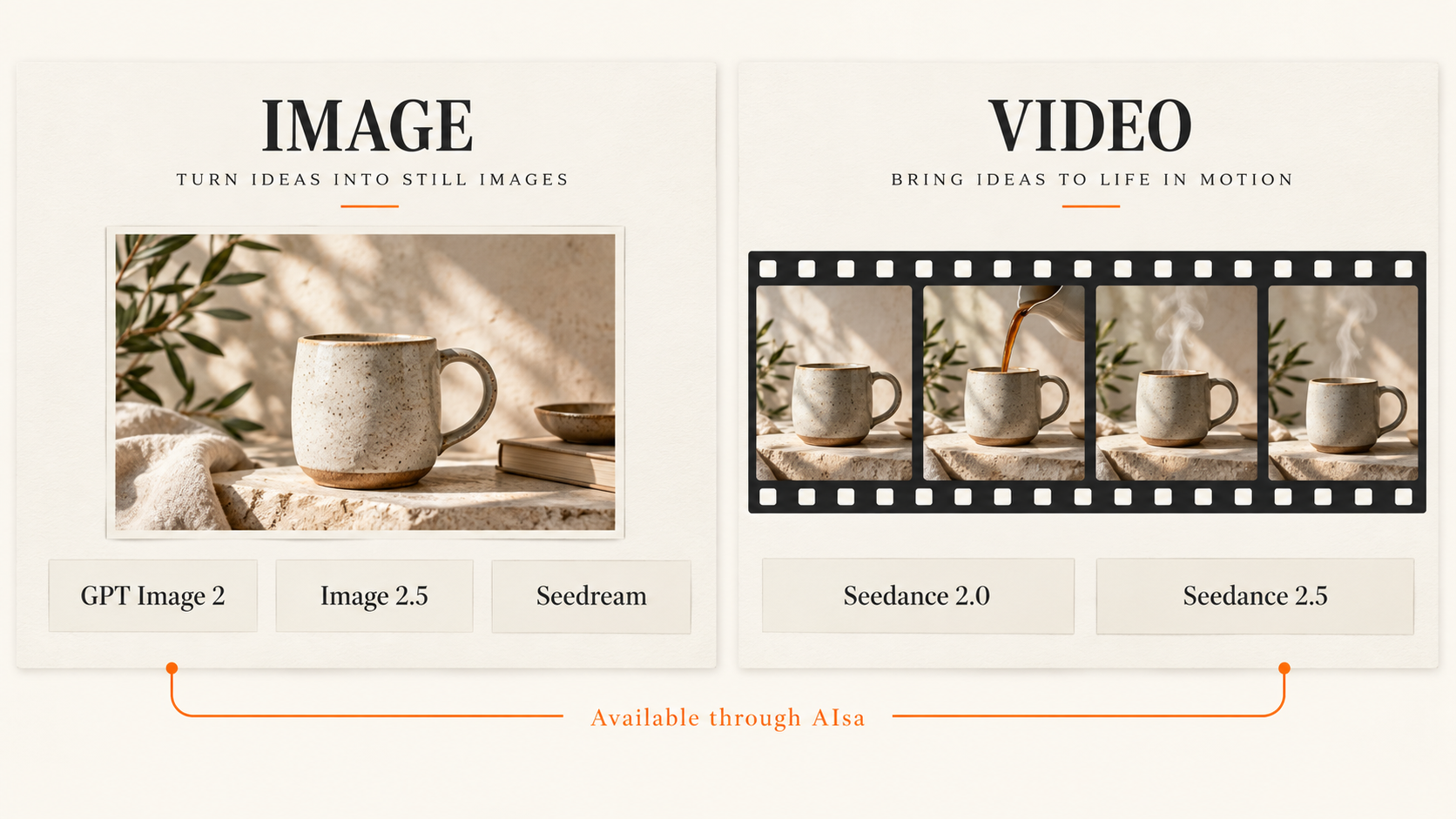
Model-selection illustration: image and video families available through AIsa. The pictured assets are conceptual, not outputs from the listed models.
AIsa's useful distinction for developers is the scope of a single integration: the same key can access supported media models, language models, and data APIs. You can start with image generation alone, then add copywriting or research without introducing another credential for each AIsa capability. Its custom-agent guide explains that setup.
For example, create an AIsa API key, set AISA_API_KEY in your environment, and generate a product image:
curl --fail-with-body --connect-timeout 10 --max-time 180 \
  https://api.aisa.one/v1/images/generations \
  -H "Authorization: Bearer ${AISA_API_KEY}" \
  -H "Content-Type: application/json" \
  -d '{
    "model": "gpt-image-2",
    "prompt": "Editorial product photograph of an unbranded ceramic mug on an ivory desk, soft morning light, restrained orange accents, no text or logos.",
    "size": "1024x1024"
  }' > image-response.json
This follows AIsa's image-generation tutorial; no paid request was executed for this article. For video, use the selected Seedance model's documented inputs and job-handling instructions.
Choose based on the models and workflow you need. WaveSpeed's visual tools may suit hands-on creative work, while AIsa is worth evaluating when media generation belongs alongside other model and data calls. This is not a measured claim that either platform is faster or cheaper. Check the AIsa model catalog for rates and compare all plans for account options.
Five practical tips for using WaveSpeed AI
- Write acceptance criteria. Specify dimensions, composition, and essential details before generating.
- Reuse a small test set. Evaluate several realistic briefs rather than one unusually good result.
- Change one variable at a time. Separate prompt changes from model and resolution changes.
- Track accepted-output cost. Include retries and rejected generations in your calculation.
- Review before publishing. Check visual errors, product accuracy, and applicable usage conditions.
Five media-generation terms to know
- Inference: Running a trained model to produce an output from inputs.
- Text-to-image: Creating an image from a written description.
- Image-to-video: Using an image as an input or reference for generated motion.
- Asynchronous job: A task that finishes after its initial submission response.
- Polling: Checking a job's status until it finishes or a waiting limit is reached.
WaveSpeed AI FAQ
What does WaveSpeed AI do?
It provides access to multiple image, video, and audio generation models through visual tools and APIs. The exact capabilities depend on the selected model.
Is WaveSpeed AI free?
Generation uses paid credits. Trial eligibility and credit offers can change, so check your account. A free desktop download does not make generation requests free.
Does WaveSpeed AI require a subscription?
Its standard prepaid pricing does not require a subscription. You top up credits and pay according to the selected model and configuration.
Can I use WaveSpeed AI without coding?
Yes. Its browser generators and desktop application support visual workflows. Use the API when you want to integrate generation into your own software.
What is an alternative for image and video API access?
AIsa is one option, with GPT Image, Seedream, and Seedance models in its catalog. Verify the exact model, input requirements, and current price for your intended task.